Showing posts with label tutorial. Show all posts

Tuesday, 5 April 2011

Standing Straight and Sounding Great

There???s a lot to be said for sitting up straight and walking tall. Indeed, there???s something about proper posture that exudes health and confidence. ... a good posture will even make you look thinner (not that any of us need to look thinner, of course, just sayin???).

For us who play a wind instrument, the habit of good, proper posture pays ??? and pays handsomely. As I mentioned in my article, 8 Tips for an Open Throat and Bigger Sound, the path between the diaphragm and the bell of the horn must be as unencumbered as possible. And you can bet your bottom Bb that a curvature in the airstream is going to do nothing but lousy for your sound.

In fact, don???t take my word for it, but see for yourself. Listen to and feel the sound you get when you play slouched down low. Now try playing sitting or standing up straight. Big difference.

Here are a few things you can do to make sure that you???re using the posture principle to the best effect ...
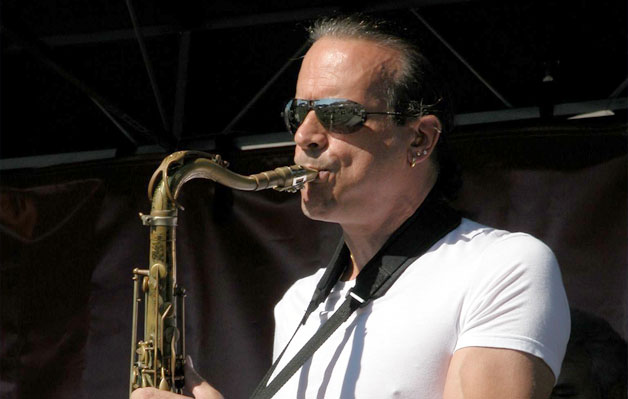
In honour of this being the starting week for the Kiwanis Music Festival here in Owen Sound, some sound advice for all you players as you take the stage, and it isn't just for the woodwinds either: standing or sitting in a proper balance is just as important for muscle control in piano and percussion, and breathing fully from the base of your chest improves oxygen intake (the O2 collectors are mostly at the bottom of the lung) and right there we're talking about a keener brain in charge of the muscle!

Tuesday, 8 March 2011

MuseScore: Free music composition & notation software

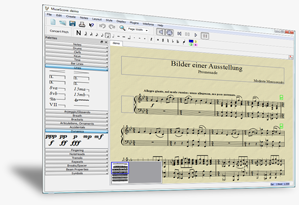
MuseScore is a free cross-platform WYSIWYG music notation program, that offers a cost-effective alternative to professional programs such as Sibelius and Finale.
You can print beautifully engraved sheet music or save it as PDF or MIDI file.

Some highlights: Screenshot

  • WYSIWYG, notes are entered on a "virtual note sheet"
  • Unlimited number of staves
  • Up to four voices per staff
  • Easy and fast note entry with your keyboard, mouse, or MIDI keyboard
  • Integrated sequencer and FluidSynth software synthesizer
  • Import and export of MusicXML and Standard MIDI Files
  • Available for Windows, Mac and Linux
  • Translated in 35 languages
  • GNU GPL licensed

We all run into this problem: You have a part to play but you need to insert a few bars of a line borrowed from another instrument, or you need to transpose the Eb Horn for your F Horn, or you need to move Bass Baritone to Treble Clef Bb, all sorts of little tasks that shouldn't need hundreds of dollars worth of software to do them, and they don't, because MuseScore does all of this and more, for free.

But is MuseScore up to the job? I think so: I was reminded of MuseScore a few days ago reading about the Petrucci Music Library plan to convert the complete Goldberg Variations into a free and open format for download and study; I figure if MuseScore is ready for Bach, it will pretty much do anything our ensemble might require.

And there's more, much more, because MuseScore is "free software", meaning it isn't owned by anyone, it is owned, built, improved and supported directly by the people who use it everyday. That's you and me and thousands of other people; it's like a great software barn-raising, you don't buy free software so much as you join it, you become part of a greater community of musicians, developers and developer-musicians who all work together to solve the problems, help each other, teach each other, address the issues, set the goals and add the features. So the software stays focused and current, and, the best part, you get a say in the matter because you're part of the team; everyone is welcome because that's how it is done, and that fact alone is more than worth the price of admission :)

Friday, 18 February 2011

Free music theory worksheets for music teachers (and learners!)

Media_httpmusicworksh_ialhn
Bass Clef drill from musicworksheets.net

on a tip from the musicmattersblog.com, a intro to an emerging website of free printable music theory resources for beginners; key signature drill sheets, reading bass clef (with accidentals!) and keyboard recognition (which is an essential skill for all musicians, even percussionists!). And did I mention it was free?

Sunday, 21 November 2010

The Secret of Great Men: Deliberate Practice

While not specifically about music, Brett & Kate McKay have posted an excellent guide apropos to musical practice or any other endeavour you wish to better:

What creates great men? ... The typical answer that most people give is that greatness is born. Nature blesses a few great men with some sort of innate gift that allows them to excel at what they do ... you???re either born with talent and destined for greatness or born without talent and destined for a life of mediocrity.

There???s one small problem with this view of greatness: there isn???t much science to back it up.

In fact, studies show that greatness and excellence aren???t ???a consequence of possessing innate gifts [and talents]???. Rather greatness is the result of years and years of enormous amounts of hard, painful work. Ted Williams spent hours hitting baseballs, and Carnegie spent his entire adolescence learning how to network and developing his prodigious memory, skills that would turn him into a mind-boggling wealthy captain of industry. ... young prodigies excel not because of some kind of mystical innate talent but on the merits of pure hustle.

In short, great men aren???t born; great men are made, and they???re made through the process of deliberate practice.

What Is Deliberate Practice?

In the book Talent is Overrated, Fortune Magazine editor, Geoff Colvin proposes five elements that allow a man to practice deliberately and thus achieve greatness.

  1. Deliberate practice is an activity designed specifically to improve performance, often with a teacher???s help.  When top performers practice, they break down their skill into sharply defined elements. After breaking down a skill into parts, a top performer will work intently on the element they need to improve most. During the entire practice, they focus solely on that one aspect.

  2. The practice activity can be regularly repeated. The world???s top performers spend years of their lives practicing. Ted Williams, the greatest hitter in baseball history, would practice hitting balls until his hands bled. Basketball legend Pistol Pete Maravich would go into the gym on Saturday mornings and practice shooting from a specific spot on the court until the gym closed at night. To be the best, you have to put in the time. In fact, if you want to become an expert in your field, you???ll need to put in at least 10,000 hours or 10 years of practice first.

  3. The practice activity provides feedback on a continual basis. Constant feedback is crucial for improvement. You have to see the results of your efforts to evaluate if the way you???re doing things is working or if you need to change things up to improve. Moreover, without feedback during practice you???re more likely to lose the motivation to keep at it. During your practice sessions, constantly stop and look for feedback. With some activities, getting feedback is easy. For example, if you???re practicing your jump shot for basketball, if the ball goes through the net every shot, you know you???re on the right track. If you brick it every shot, that???s feedback that you need to change things up.

  4. Deliberate practice is highly demanding mentally, whether it???s purely physical or mental. This factor separates deliberate practice from mindless practice. When you???re practicing deliberately, you???re focusing and concentrating so much on your performance that you???re mentally exhausted after your practice session. Deliberate practice is so demanding mentally that studies show that ???four or five hours a day is the upper limit of deliberate practice, and this is frequently accomplished in sessions lasting no longer than an hour to ninety minutes.??? If you feel absolutely bushed after just an hour, chances are you practiced deliberately.

  5. Deliberate practice isn???t much fun. Most people don???t enjoy doing activities that they???re not good at. It???s no fun to fail over and over again and receive criticism on how you can improve. No one likes to be humbled like that. We???d rather do stuff at which we excel because succeeding is enjoyable, and it strokes our egos. Yet deliberate practice is specifically designed to focus on things you suck at and requires you to practice those skills over and over again until you???re mentally exhausted. What a buzz kill.

Don???t get the wrong idea. These studies don???t say that just because you spend a lot of time deliberately practicing a skill, you???ll become a master at everything you do. If you???re 4???5???, no amount of practice will allow you to slam dunk like Michael Jordan. What these studies do suggest is that we???re not as limited by our natural talents as we often think we are.

AoM Man-Up Challenge

This week I challenge you to pick an area of your life that needs improvement and apply the principles of deliberate practice to it.

read the full article over on The Art of Manliness

"The purpose of practice is not to better your opponents. The purpose of practice is to do better than you did yesterday." (Training officer to his men in Godzilla: Final War)

Reminder: the Owen Sound City Band next practice at OSCVI is tomorrow at 7:30, and our last practice of the 2010 year will be November 29th.

Sunday, 12 September 2010

The Complete Beginners Guide To Practice

Complete Beginners Guide to Music Practice
A downloadable guide to the practice of music practice from our colleagues over at HowToPractice. 50,000 years in the making (200,000 manhours) and best of all, it's all released under a CreativeCommons license, free for the taking with express permission to copy, rebundle and distribute in whole or in part to your music students, your classmates or your band members.

The Complete Beginners Guide to Practice is the How To Practice guide to getting started with music practice. Over 50 pages packed full of advice it is the perfect way to improve your practice.

If you are not already a member of HowToPractice you can join for free. Then if you would like to discuss anything you have read in the guide or ask any questions or get help with your practice then you can do so in the Music Practice Forums.

to pick up your own copy, click here or visit HowToPractice.com

My most favourite quote on the practice of practice is not actually in this book, it's from the movie Godzilla: Final Wars: two brothers have a falling out and go into the battle practice room, one earnestly tries to do in our hero who, when he gains the upper hand, refuses to deliver a final blow. The teacher interrupts their quarrelling and tells them:

"The purpose of practice is not to better your opponent. The purpose of practice is to be better than you were yesterday."


Monday, 6 September 2010

Shifting the Focus back to Expression and Creativity

The Sensible Flutist offers some insights and ideas to the role of creativity and imagination in the performance of music, even scored music, and adds some advice for stepping just a toe out of the discipline of technical musicianship:
the conversation took a turn towards the question of creativity and how so many performances nowadays are technically accurate or "note perfect" but lacking in musical expression. For flutists, the current focus leans toward technical superiority and perfection. My guess is that this focus extends through all woodwinds because of the physically emcompassing requirements of playing a wind instrument. We get so wrapped up in the physical and technical side of playing the instrument that we forget why we committed ourselves to music in the first place. I certainly didn't start playing the flute because I wanted to learn to control my breathing or have fast fingers. I began playing the flute for the expressive powers and potential it holds.

Classes and books often focus only on the ways and means to make sounds without asking why it is we wanted to make these sounds in the first place; as with reading any script, it isn't so much what you say as what you say with it that counts, and as our flutist correspondent observes, the best way to get a feel for that is to go out and see directly how music is used in the live setting!

Thursday, 2 September 2010

Claude Gordon???s ???The Seven Basic Items???

Media_httpbrassmusici_hifyc

Why did so many people come from so far away to study with Claude Gordon? What made him unique? Why do so many people owe their careers to this man’s teaching?

The following is an overview of “The Seven Basic Items” with a few brief comments on their implications. Each item is intended to work together in harmony with all the other items. If one item isn’t working correctly there will come a day when the player will struggle.

These exact items are also found in Herbert L. Clarke’s Setting Up Drills, which shows how Claude approached things exactly like Clarke did. He studied with Clarke for ten years. Gordon’s Brass Playing Is No Harder Than Deep Breathing has been misunderstood by some as focusing only on breathing. The point is that once everything is working correctly, playing is as simple as taking a big breath, which anyone can do